

time really is a flat circle
On temporality, football, and why Alexis Wright should win the Nobel Prize

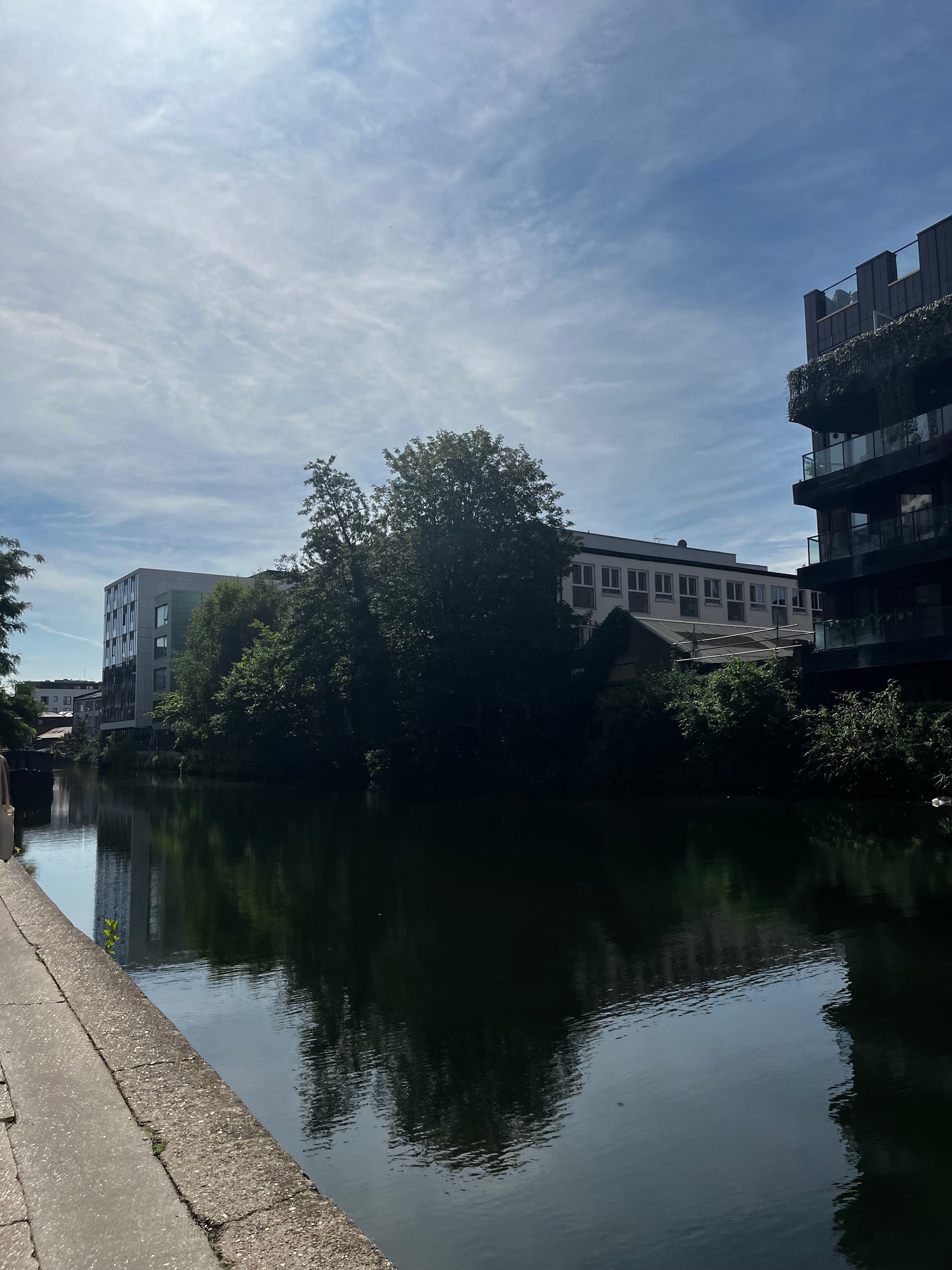
The morning that England beat Mexico in the round of sixteen (having woken up, ludicrously, at four am, in the ninety-third minute) I lay in the dawn for a while and then took the dog for a walk up Regent’s Canal, nearly to Broadway Market. While I walked along the path, which at this time of year is beset by flowery stragglers and stray hedge branches that catch my hair and arms, I listened to “Godspeed,” a song by Zach Bryan. Bryan is a controversial figure, I realise, but I don’t really care about all that, because he has a sexy, raspy little twinge to his voice that makes me believe him when he sings that only God and his momma know what he needs. God and his momma being to him the same thing, which, well. Yes.
What he’s singing about really, of course, is time, and the helpless tyranny of living under it, and it’s this experience — vectored through the self and through landscape and history — that I wanted to write about. His song reminded me of that particularly evangelical attitude to life: “Give it up to God.” This is an abdication of responsibility and of knowledge that, more often than not, shoots the speaker in their pious foot through its call for divine passivity. Leaving it up to the Lord means forgoing action that could better — or even save — your life. Monica Potts writes very well about the ways martyrdom can perpetuate socioeconomic suffering in her book The Forgotten Girls, which is half memoir and half investigative journalism, centred on her experience of poverty in the Ozarks and what it takes for women in the community to wrangle their way out of some very old patterns.
To me, though, giving it up to God is also about waiting. It’s one way of making sense of time, and the feeling of moving through it, which is so often unbearable and very confusing. We may say (thank you Kim Kardashian and Molly-Mae) that everybody has the same twenty-four hours a day, but this is untrue for more reasons than we think, beyond class conditions and access to eternal youth via injectables. It’s untrue because the fabric of these hours, for each of us, is woven from very different materials, depending on what we are going through and where we are. A second is not a second is not a second. Intense pleasure can dilate a minute into eternity, as can intense pain. Anticipation can make afternoons stretch into years, and regret can make the distance between us and that terrible mistake collapse and shrink like an accordion. Who among us has not lain awake at night in the grip of heartbreak, longing for sedation, each moment akin to a deep cut nicked into a vital organ? And if you would like to know what it’s like to have your days puddle and melt and slide into each other, defying all temporal logic, then you need only fall in love.
On a larger, sadder scale, someone who has known sustained abuse (domestic, child, institutional) will experience time differently, mostly because of what it does to your memory and internal chronology. There is a reason why Carmen Maria Machado chose to structure In The Dream House in a series of surreal, choose-your-own-adventure fragments, or why Anne Carson’s The Beauty of the Husband (my current brilliant read) is laid out in twenty-nine tangos. Breytenbach Breytenbach’s hallucinogenic Mouroir: Mirrornotes of a Novel, written in incarceration, is another example of this. Everything circles back, shrinks on itself like an injured animal. It is not possible to tell the story of such violence in a traditional manner: time must be shaken up and dissected, shifted around, destroyed like the psyches of the abused and the traumatised. It must be written sideways, because it is lived sideways. This — not the personal essays of the monied intellectual class — is the real use and intent of fragmentation, in my opinion, but I’ll stop before I get into trouble.
How else do we group time? A musician could think of their days in symphonic segments; a fisherman feels it through tides and currents. Prehistoric women, we know, used their menstrual cycles. A chef could sense it by the patterns of diners, which ebb and flow through mealtimes. A chess grandmaster would count it via their game clock, a farmer has the chickens or the cows. I’d bet anything that for Harry Kane and the rest of the England squad, that eleven minutes of extra time lasted longer than their entire lives to date, everything dialed down to breath and grass. And the oldest and most collective of ways: the sun, the moon, day, night.
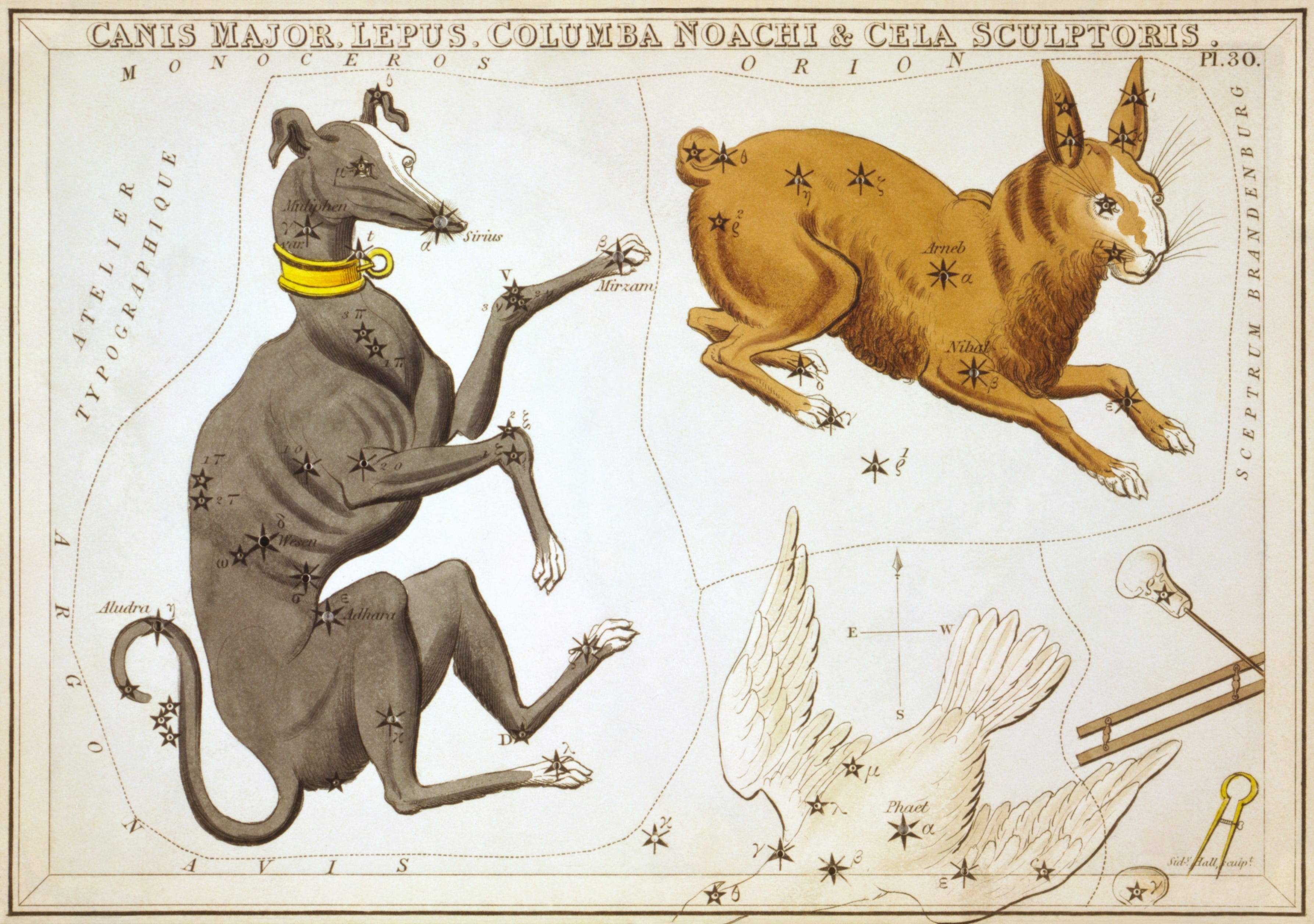
What are hours, then, or minutes; what are years or months or decades? We invented these out of nothing, really. The human instinct: to contain and make knowable. We have twelve hours in a day because when the Nile flooded, the ancient Egyptians observed the heliacal rising of Sirius — the star’s reappearance on the horizon just before dawn, after months of invisibility — and around it built a system of star-groups whose risings divided the night into twelve parts; perhaps also because we have twelve finger-bones, which is why Georges Ifrah posits that base-12 and base-60 counting systems are so widespread across disparate cultures. In fact, we only settled on the fixed length of an hour in the 14th century. Before that they stretched and shrank with the light; an eminently sensible reaction to the turning of the earth. Yet how strange to think that we are governed, in London, by a system devised thousands of years ago, meant to track the rising of a river on a different continent.
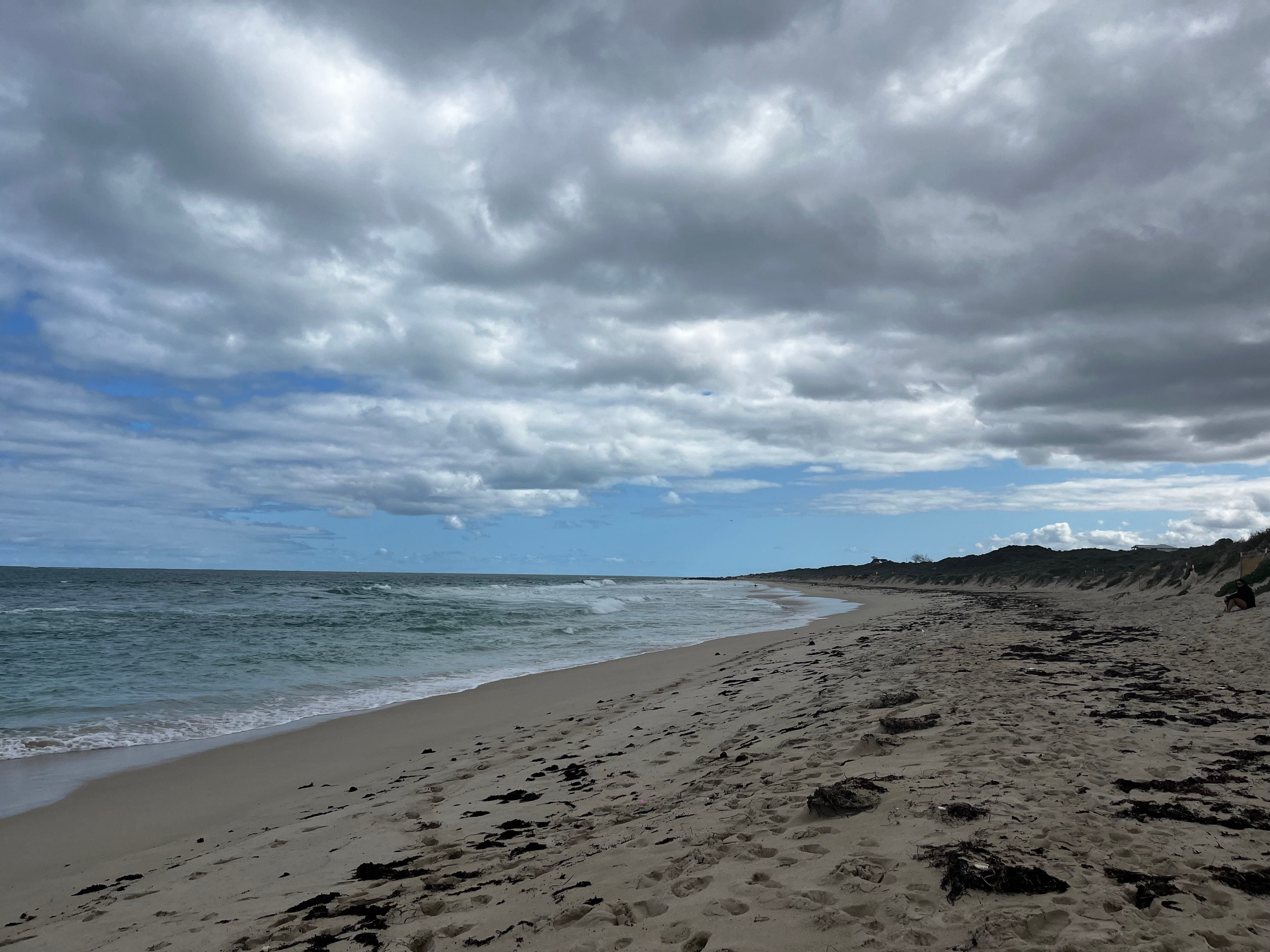
There are certain places where I feel the uselessness of such quantities very keenly, which leads me to the second half of this essay, which is about settler-time, or imported time. If we are able to acknowledge the absurdities of colonial geography, we should also be able to acknowledge the absurdities of colonial temporality. By the pristine, wild coastline that faces my mother’s house, lying prone in the sand, time passes differently. So too in the red dust of the desert, or the jarrah forests, or under the skeptical grey sky of Albany. There are no four seasons in Perth (I mean, are there four seasons anywhere but the east coast of the United States and the UK?).
There are six seasons in Noongar tradition, and the hastening of each one is not tied to an arbitrary day like June 1st, but instead to the opening of a particular flower; the call of a particular frog. In this way, time is malleable, operating in conjunction with (and sometimes in deference to) the natural environment. That is in direct contrast to how we usually imagine things, which relegates time into a more abstract, fixed noun than place. Erosion only tends to go one way, in conventional belief. Well, I disagree; I hold more closely to Bakhtin’s idea of chronotope. There is a time and a place, we say, separating it out, but that’s not quite right. One cannot be pared from the other, they occlude: there is a timeplace.
The English put a stop to that, of course. Taxonomies can be wielded like weapons; they kill as much as guns do, anyway, just slower and more pervasive. The bullets they fired in 1788 are still flying through the air and finding their target. As many theorists have argued in much better and more informed ways than me, Europeans brought their seasons, their months, their way of things, superimposed upon the religions and cultures of Aboriginal Australians. This was another kind of genocide.

In his 1953 essay “The Dreaming,” which appears in his collection White Man Got No Dreaming, the anthropologist WEH Stanner coined the term “everywhen” in an attempt to push back against simplistic interpretations of the Dreaming; a philosophy of timeplace that is common amongst many Aboriginal communities. Stanner’s intervention is very useful, and I think still quite well-regarded for its context, but more valuable is a recent collection of responses to him by Indigenous writers and scholars. They tend to agree with him, however, in his assertion that European notions of dates and history are essentially useless.
Alexis Wright, who is Australia’s most interesting and internationally underrated author, is very good about this. A Waanyi writer who thinks deeply about her people’s traditions, none of her books have a conventional relationship with time, or genre, or land — or, in fact, anything at all. 2013’s Swan Book imagines an apocalyptic future, and follows Oblivia, a young Aboriginal girl who has survived, as she tries to get back to country. There’s “an awareness,” Wright writes, “and insistence that all times are important, and no time is resolved.” (As an aside, there is nobody better at naming characters than Alexis Wright.)
Carpentaria, which won the 2007 Miles Franklin Prize, is a kaleidoscope of timelines, nominally about the residents of a fictional town called Desperance, but really about everything (and everywhen). As Wright explains herself, the novel is “in constant opposition between different spaces of time. Time is represented by the resilience of ancient beliefs overlaying the inherited colonial experience, which sometimes seems nothing more than hot air passing through the mind, while the almost ‘fugitive’ future is being forged as imagination in what might be called the last frontier – the province of the mind.” She cites Carlos Fuentes, who in his book Tiempo Mexicano (an excellent read!) argues something similar about Mexico’s relationship to time and colonisation — “a country of suspended time.”
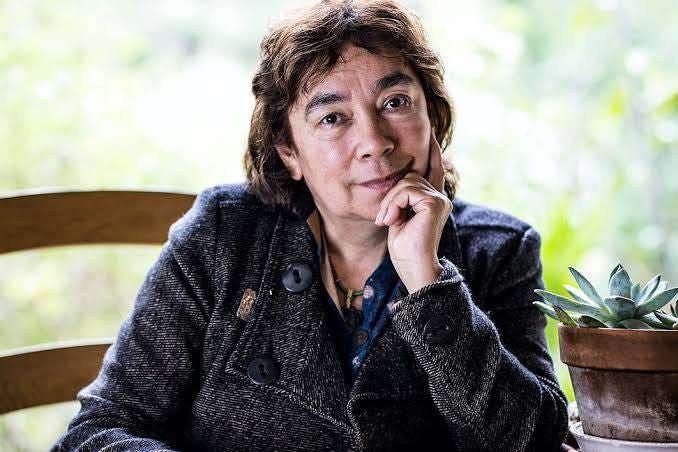
Wright’s latest, sprawling novel, Praiseworthy, applies a similar approach. Funny, ambitious, maximalist: Praiseworthy is Wright’s attempt to create “a house of the country,” a “vast inland world of heart and mind.” In a small northern town, plagued by a hazy cloud, Cause Man Steel is trying to set up a feral donkey immigration scheme; his wife Dance wants to move their family to China; their eldest son Aboriginal Sovereignty kills himself; their youngest embarks on his long-held ambition of becoming white. The fragile line between ancient and modern collapses. While reading, the word that came to me was rhizomatic, as Deleuze and Guattari would have it (and indeed there is a solid link between the three, which should be written by someone much better versed than me). It is endlessly interesting, endlessly inventive.
Now, on a Wednesday that is not a Wednesday, I remember Coetzee’s assertion that English is an unfit medium for truth in South Africa. I think this is true in Australia, in a sense, but I also think we can go further: Western modalities of chronology are unfit too. The very way we understand forwards, and back, and the beginning and the middle and the end — these are unmappable onto the continent of stories and songlines and weather that was invaded two hundred and fifty years ago. Wright’s attempt to tackle this reality is why I think she deserves the Nobel more readily than someone like Murnane, who can pull off a sentence like nobody else, but God love him, can’t shut his mouth about the bloody horses.
Anyway. Stanner finds a word that he returns to over and over in “The Dreaming” that he feels sums up the idea of the everywhen, which is “abidingness.” I was rereading his essay when I paused on the definition: “enduring, permanent, or steadfast.” It struck me. Some things, I suppose, are forever like the sea or the mountains or the sun; bigger than human graspings of scale. They are not eternal, but we experience them as such, and so who’s to say they’re not? Wright said she wrote Swan Book because she was simply forced to assume that her people will survive. Anything else is outside of understanding, and the very act of thinking and believing makes it so: They will abide.

Abide with me, abide with me. And so we’re back where we started, aren’t we, back to Zach Bryan and God and giving it all up — love, anger, joy, disappointment, hurt — to something greater than ourselves; something that supersedes the clock. In the case of the Three Lions, at the Azteca on Monday, that was the referee’s finishing whistle, which sent Jude Bellingham crashing down onto his knees on the pitch, almost crying. For me maybe that’s the dog shoving his wet nose in my face, or my mother’s call ringing through at odd hours of the night. Ah but, for her, it’s morning. Who’s to say it isn’t morning for me too?
Only God and her know what I need, after all.
Onbeskryflik mooi my skat xxx
Rustin 🧡 loved this! Can’t wait to read more x